


What do meteorologists do?
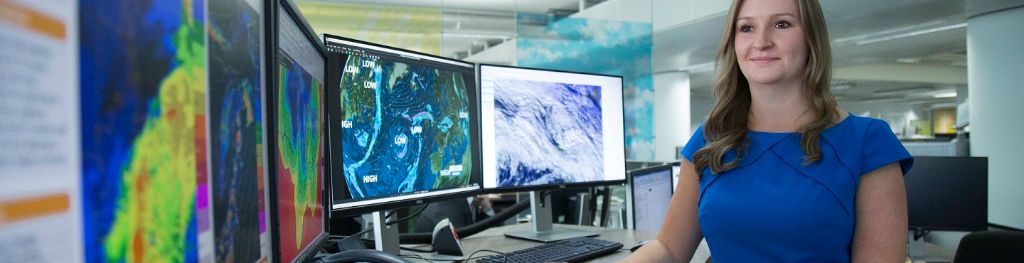
Meteorologists play a crucial role in delivering accurate weather forecasts by combining advanced computer models with human expertise.
Their work is a blend of science, technology, and experience, ensuring that forecasts are as reliable and up-to-date as possible.
The human-machine partnership
While computer models generate initial weather forecasts, meteorologists review these predictions and compare them with real-time observations. If discrepancies arise—such as unexpected cloud cover—they assess how these differences might affect not only the current forecast but also predictions for the days ahead. This process highlights the importance of checking forecasts regularly, as even small changes can have significant ripple effects.
Real-world example
Suppose more cloud cover appears than anticipated. This can lower daytime temperatures, which in turn may cause nighttime temperatures to drop further than expected. Such a shift could mean the difference between fog forming or not, potentially impacting airport operations and road safety. The next day, the sun’s energy might be spent dispersing fog rather than warming the air, leading to cooler temperatures and possibly affecting cloud and shower formation. This example illustrates how interconnected and sensitive weather systems are to even minor changes.
Navigating atmospheric chaos
The atmosphere is highly complex and interconnected. A small change in one variable, like cloud cover, can cascade through the system, altering forecasts in countless ways. Meteorologists use their expertise and experience to spot when forecasts diverge from reality and to judge whether these differences will have broader impacts. They then adjust the forecast as needed, ensuring it remains as accurate as possible.
Comparing forecast models
Meteorologists don’t rely on a single model. They compare outputs from various forecasting centres worldwide, such as the Met Office, ECMWF, NCEP, and DWD. These comparisons are especially valuable for long-range forecasts, where direct observation isn’t possible. By examining different models and their ‘ensembles’ (multiple runs with slightly varied starting conditions), meteorologists can gauge the range of possible outcomes and the confidence level in a particular forecast. Consistency between models and across different runs increases confidence, while sudden changes or disagreements lower it. In uncertain situations, forecasts may include probabilities to reflect different possible scenarios.
Empirical techniques
In addition to computer models, meteorologists use empirical techniques—simple equations based on current observations like temperature and humidity. These methods, developed before the era of advanced modelling, remain valuable for quickly checking model accuracy and refining forecasts, especially in borderline situations (e.g., determining if precipitation will fall as rain, snow, or sleet, or if fog will form). This hands-on approach enables meteorologists to add value and nuance to automated forecasts.
Meteorologists are essential in interpreting, validating, and refining weather forecasts. By blending scientific knowledge, real-time data, and experience, they ensure that forecasts are not only accurate but also responsive to the ever-changing and chaotic nature of the atmosphere.