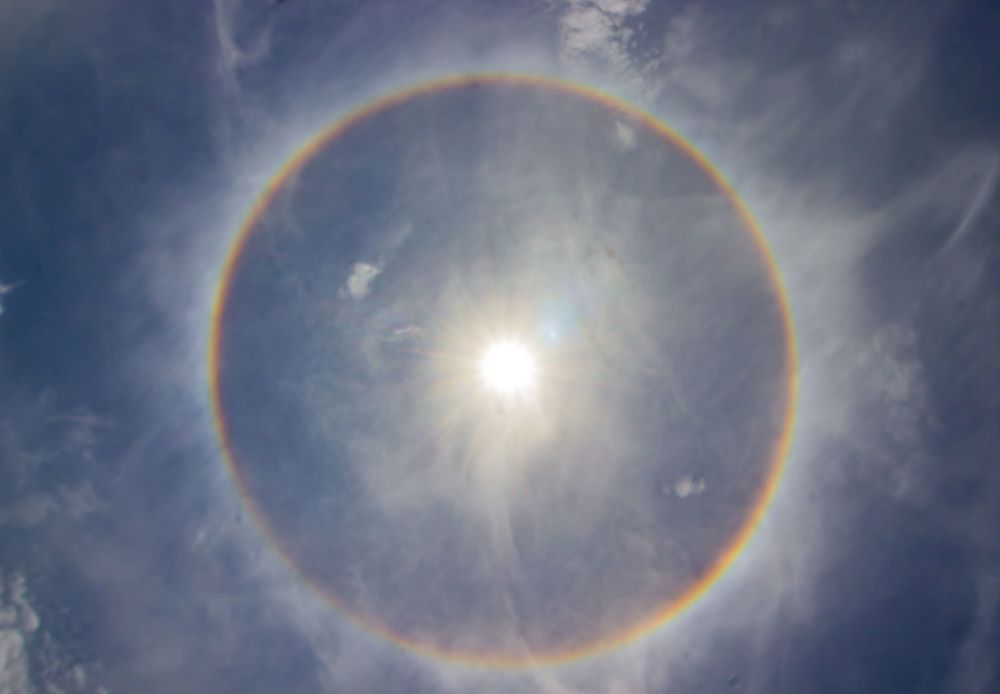
Rainbows: optical wonders
A rainbow is an arc-shaped spectrum of light which is created by refraction and reflection.
Rainbows are one of nature’s most captivating optical phenomena—arcs of colour that appear when sunlight interacts with water droplets in the atmosphere. But what exactly causes a rainbow, and why do we see those familiar bands of colour?
How rainbows form
A rainbow is created through the refraction and reflection of sunlight in water droplets. When sunlight passes through a raindrop, it slows down and bends (refracts), splitting into its component colours. Some of this light reflects off the inside surface of the droplet, then exits and bends again, sending a spectrum of colours toward the observer. For a rainbow to appear, the Sun must be behind you and water droplets in front.
The visible arc depends on the Sun’s position. When the Sun is high, only a small arc may be visible above the horizon. From elevated viewpoints, like a mountain or airplane, you might see a full circle rainbow.
The colours of a rainbow
Sunlight contains a spectrum of colours, which appear white when combined. As light passes through water, it splits into different wavelengths, producing the familiar sequence of colours. The classic order is red, orange, yellow, green, blue, indigo, and violet (ROYGBIV), with red having the longest wavelength and violet the shortest.
Although Isaac Newton popularised the idea of seven distinct colours, a rainbow actually contains a continuous range of hues—far more than the human eye can distinguish. Modern definitions often merge indigo into blue and violet, but the seven-colour sequence remains a helpful mnemonic.
Different types of rainbow
Rainbows come in several fascinating varieties, depending on atmospheric conditions:
Double rainbows
A double rainbow features two concentric arcs. The secondary, fainter rainbow appears outside the primary one, with its colours reversed. This occurs when sunlight is reflected twice inside the raindrop. The area between the two bows, known as Alexander’s band, appears darker because no sunlight is scattered toward the observer there.
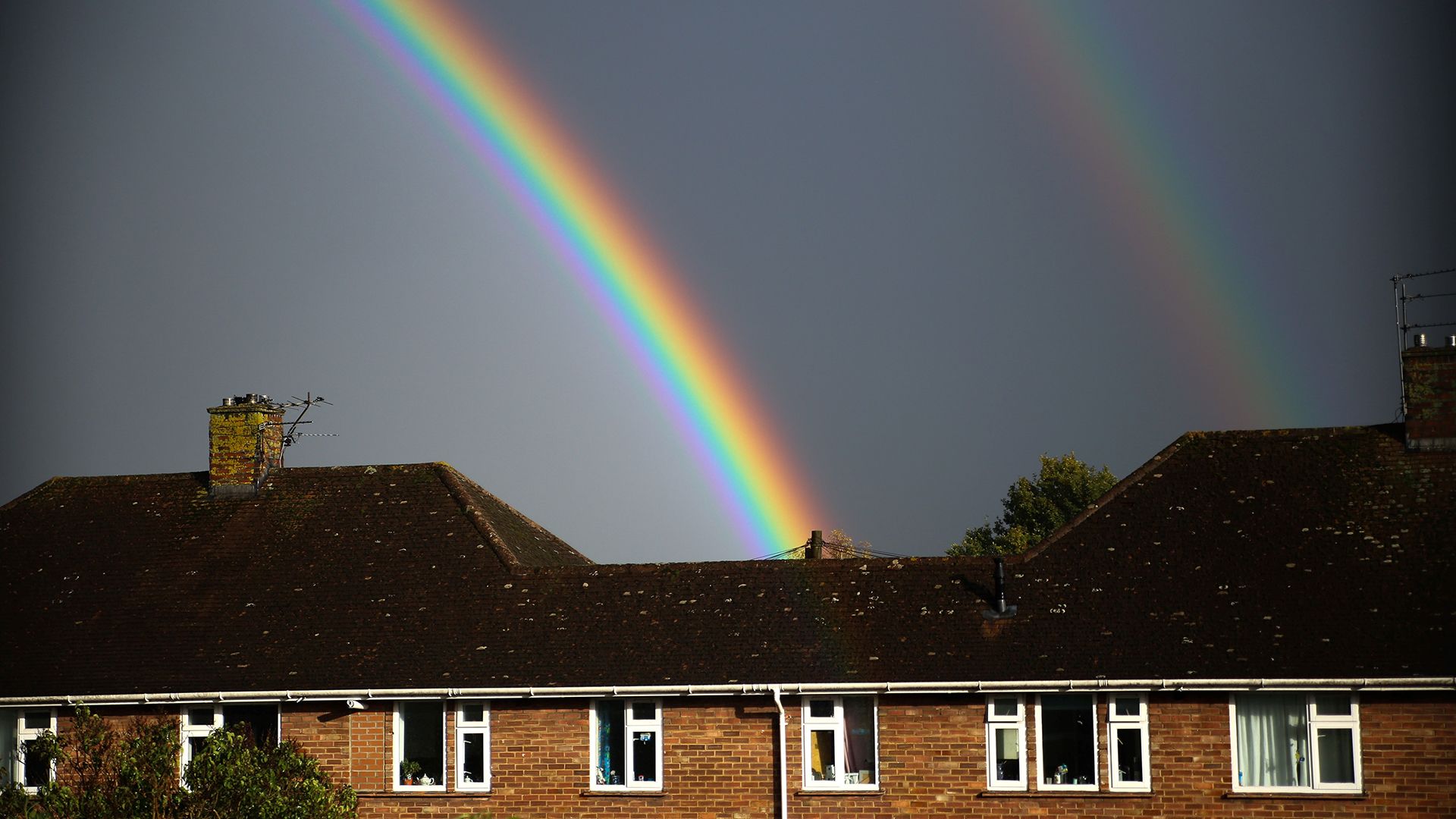
Fogbows
Fogbows, or 'white rainbows,' form in fog, mist, or cloud. The water droplets are much smaller than raindrops, causing the light to diffract and smear out the colours. As a result, fogbows appear pale or nearly colourless and are broader than typical rainbows. Fogbows are often seen with a related phenomenon, called a 'glory,' which appears as a series of coloured rings around the observer’s shadow.
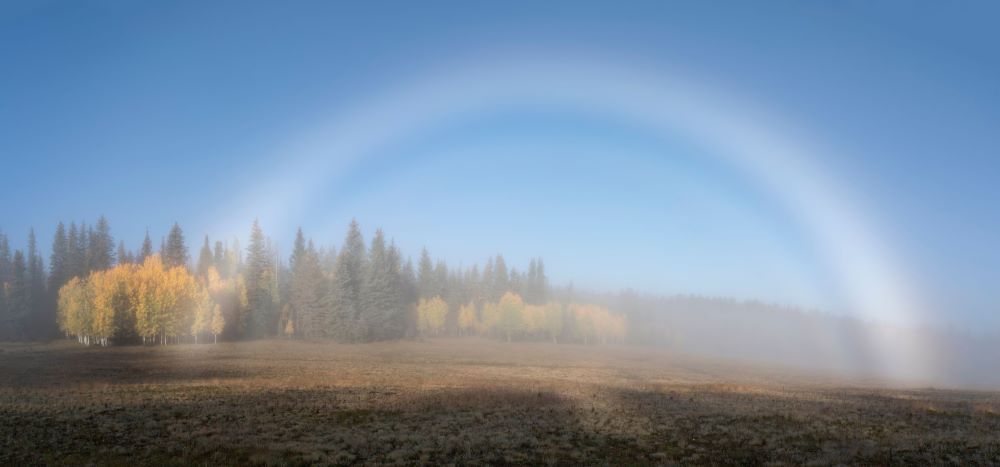
Moonbows
Rainbows can also occur at night, created by moonlight instead of sunlight. These 'moonbows' or ‘lunar rainbows’ are rare and usually appear white to the naked eye, as the light is too faint to activate cone colour receptors. However, long-exposure photography can reveal their subtle colours. Moonbows require a nearly full and low moon, a dark sky, and water droplets opposite the moon. The best time to see moonbows is a couple of hours after sunset or before sunrise.
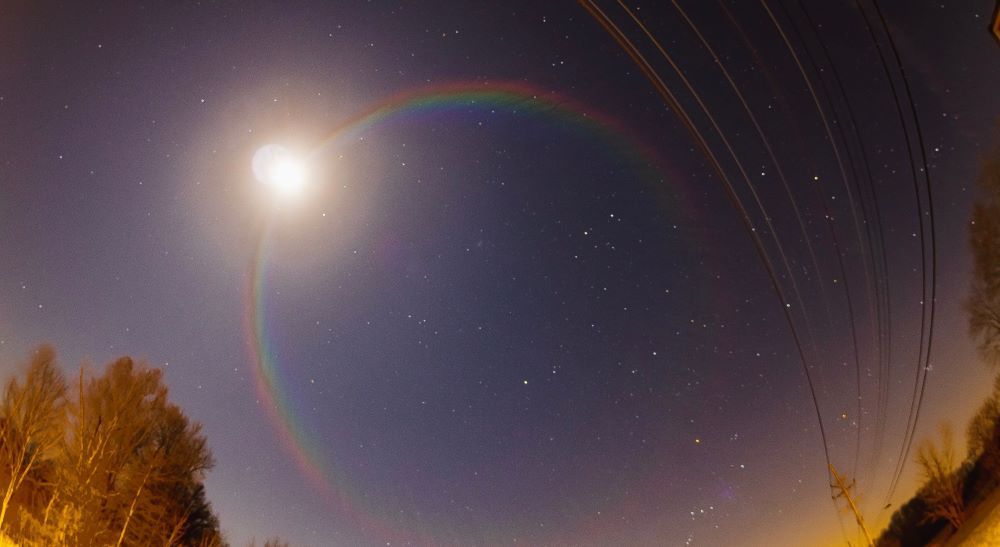
Full circle rainbows
We normally only see only a partial arc when we see them, but rainbows are actually full circles. The ground usually blocks the lower half, but from high vantage points—like tall buildings or aircraft—you might glimpse the entire circle if water droplets and sunlight are both present below your observation point.
Next time you spot a rainbow, remember: you’re witnessing a beautiful interplay of light, water, and perspective—a natural marvel that has inspired curiosity for millennia.