
What is the difference between rain and showers?
Find out the difference between rain and showers and the difference it might make to your day.
When you check the weather forecast, you’ll often see terms like rain or showers. They might sound similar, but they describe very different weather patterns. Knowing the difference can help you plan your day better.
Rain vs Showers - the basics
Rain usually comes from various types of stratus clouds (including stratus, altostratus and nimbostratus) associated with large-scale weather fronts. A front is a boundary between two bodies of air that have different properties and may stretch for hundreds of miles, bringing widespread, persistent rainfall that can last for hours or even a whole day. When rain is in the forecast, expect grey skies and continuous wet weather.
Showers, on the other hand, originate from cumulus clouds formed by convection, which is defined as the movement of particles through a substance, transporting their heat energy from hotter areas to cooler areas. Showers are short-lived, localized, and highly variable in intensity. They can pop up suddenly, drench one area, and leave another completely dry. When cumulus clouds grow tall enough, they become cumulonimbus, which can produce thunderstorms.
How they form
Fronts produce most of their rain through mass ascent, where one body of air is lifted upwards by another body of air. The lifted body of air cools, condensing the water vapour it contains to form clouds and then rain.
Showers are created by convection, bubbles of warm air rise and cool as they gain height leading to the formation of cumulus clouds. These clouds often appear fluffy with their distinctive cauliflower-like tops. Once the cloud reaches a certain depth or attains a cold enough cloud top temperature it will produce precipitation.
Seasonal patterns
Showers are possible at any time of the year, however they are more likely and more widespread during the summer due to the local effects of the hills and valleys, land and sea and subtle variations in heat and moisture:
Summer Showers: During the summer the atmosphere is often finely balanced, so that when air ascends, it can keep rising until it cools and forms shower clouds. Showers will often form over hills where moving air is forced to rise over them, but also on the coasts where the land heats up and draws in cooler air from the sea to replace it. If the conditions are right, as this air rises inland showers can form. They can often form into lines, or bands, known as convergence lines which means that, depending on your location and direction of travel you could either see shower after shower or simply wander through them and see no more.
April Showers: Linked to the transition from winter to spring. At this time of year, the jet stream starts to move northwards, which can bring the first signs of warmth, but also tends to make our weather more unsettled.Showers can also develop due to daytime heating; at this time of year the heating we receive from the sun increases as the sun risers higher in the sky and daylight hours increase resulting in warmer land temperatures.
Forecasting challenges
Predicting showers is tricky. A single shower may cover only 1 square kilometre and move unpredictably, unlike the large, organized bands of frontal rain. One analogy we use to picture the complexity of this forecasting challenge is comparing it to boiling a pan of water and having to guess exactly where and when the bubbles will appear. This kind of detail is quite difficult to forecast but is exactly what most of us are interested in during the summer.
In our forecasts
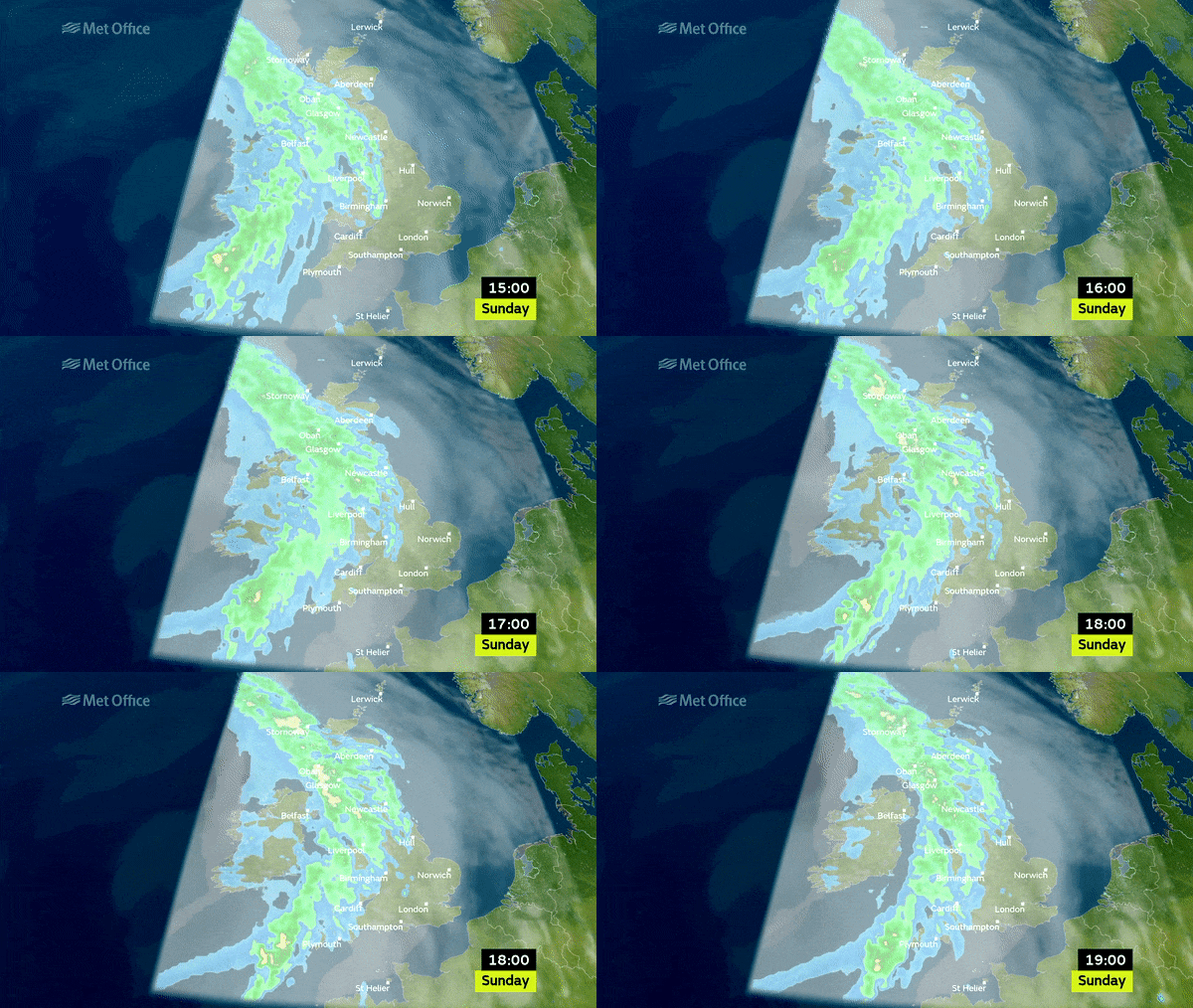
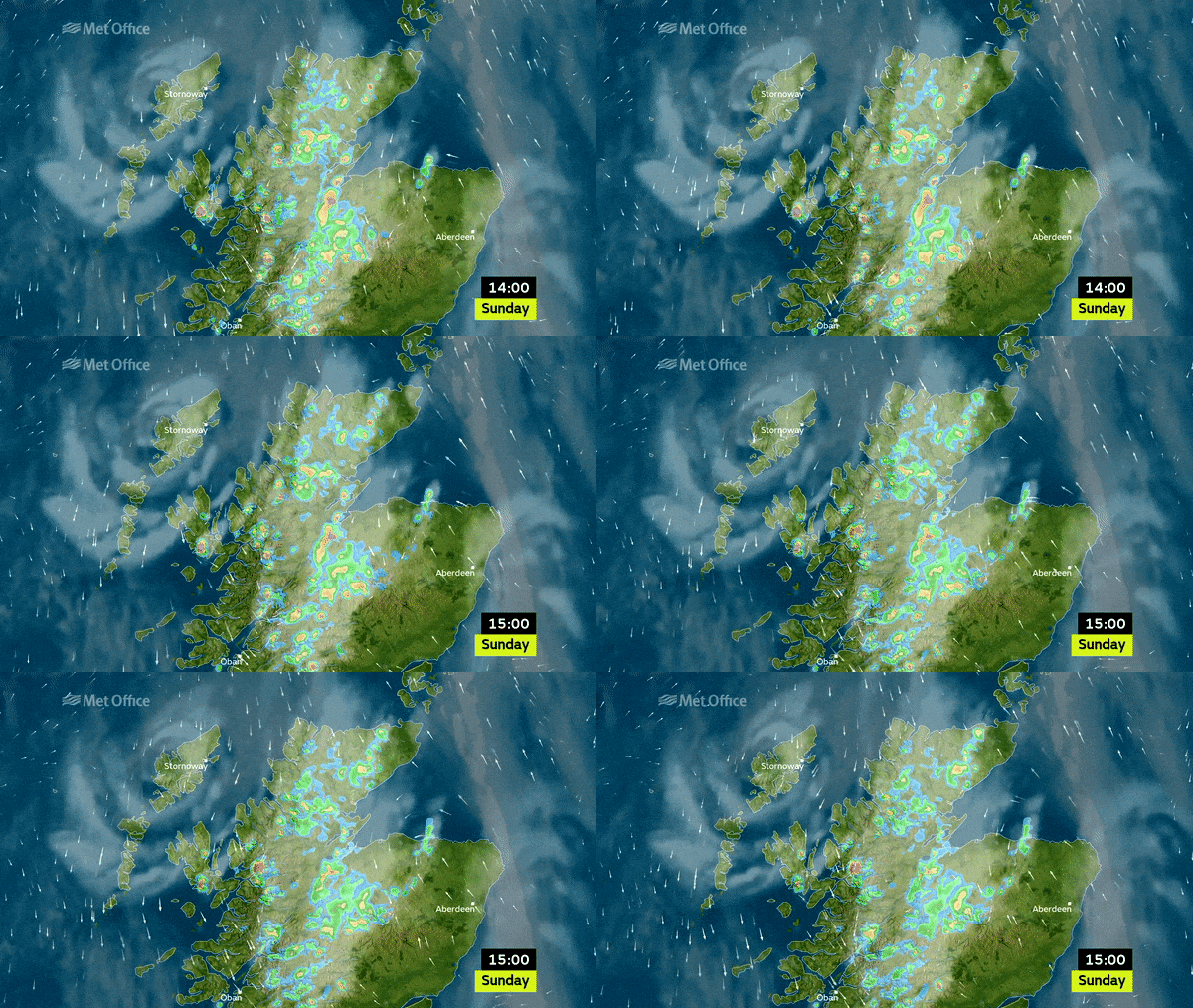
The difference between showers and rain becomes readily apparent when we take a top-down look at the weather map. In the examples below, the difference is evident in a large, organised band of rainfall moving across the UK, and isolated showers spouting up and disappearing across Scotland.
We also distinguish between the two in our forecasts with different symbols referencing showers or rain as in the table below:
Shower and rain weather forecast symbols
| Day | Night | |
|---|---|---|
| Light rain |
|
|
| Light showers |
|
|
| Heavy rain |
|
|
| Heavy showers |
|
|


What it means for you
- Rain: Expect continuous wet weather and grey skies. Perfect for indoor plans.
- Showers: Intermittent bursts of rain with bright spells in between. Hit and miss depending on location—so keep that umbrella handy!
Next time you hear “sunshine and showers,” you’ll know exactly what to expect!