Optical effects: nature's light show
Light creates stunning displays in our sky through reflection, refraction, scattering, and diffraction.
These processes produce phenomena like rainbows, haloes, coronas, and more.
Haloes
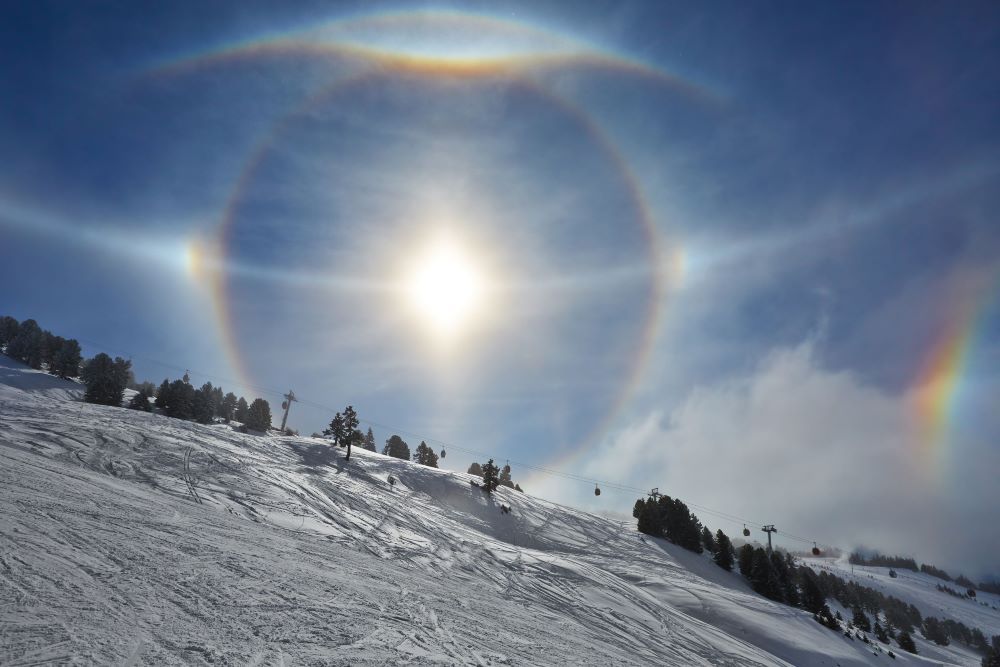
Haloes appear when sunlight or moonlight interacts with tiny ice crystals in high cirrus clouds or cirrostratus clouds and produces a halo surrounding the sun or moon.
Most ice crystals are hexagonal, and when light passes through them at a 22° angle, it creates the most frequently seen haloes – known as 22° Haloes. Other halo sizes, like 9° or 46°, can form depending on crystal structure and orientation. Historically, spotting haloes was often used to predict weather, as the cirrus clouds that create them often signal an approaching weather front.
Coronas
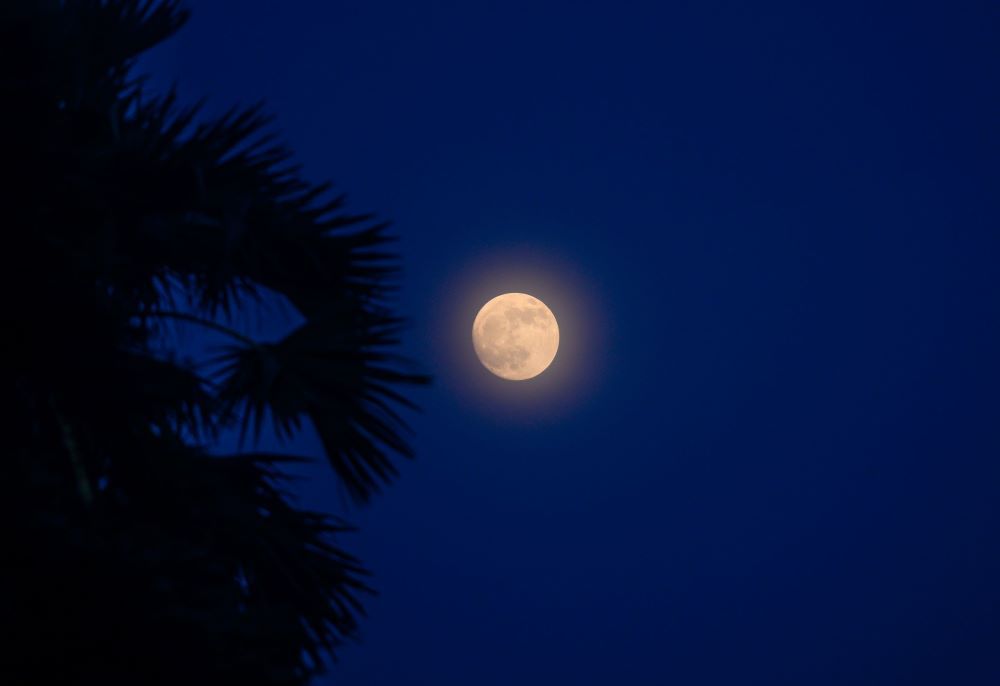
While it is common for most optical phenomena to arise through a combination of reflection, refraction and diffraction, coronas are formed by diffraction alone. This is when light bends around water droplets in clouds.
Most visible around the moon, coronas are where diffraction of water droplets causes white light to separate into colours. The smaller the water droplet, the larger the corona will be. Although coronas are visible around the sun, they are weaker than the bright direct sunlight itself, making them harder to see. As clouds develop and water droplet sizes vary, coronas become more diffuse and irregular.
Brocken spectre
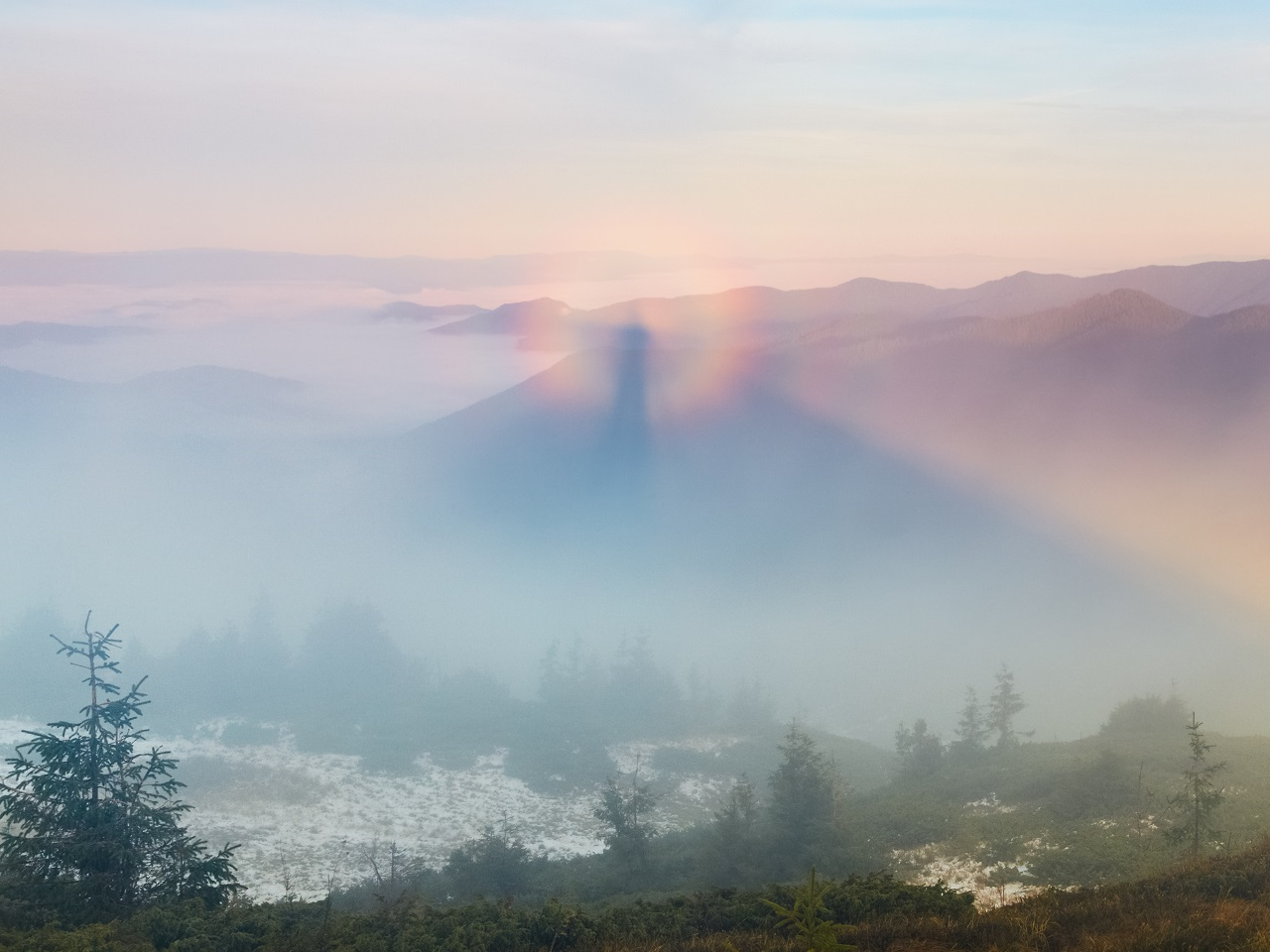
A Brocken spectre is a giant shadow cast onto mist or cloud, often seen from mountain tops. When the sun is behind an observer, their shadow is projected onto the mist, creating the illusion of a distant, enormous figure. This effect is an optical illusion, magnified by the way shadows fall on water droplets at varying distances. The phenomenon was named for the German mountain on which it was first noted and has appeared in literature by authors like Coleridge, Lewis Carroll and Dickens.
Parhelion (sun dogs)
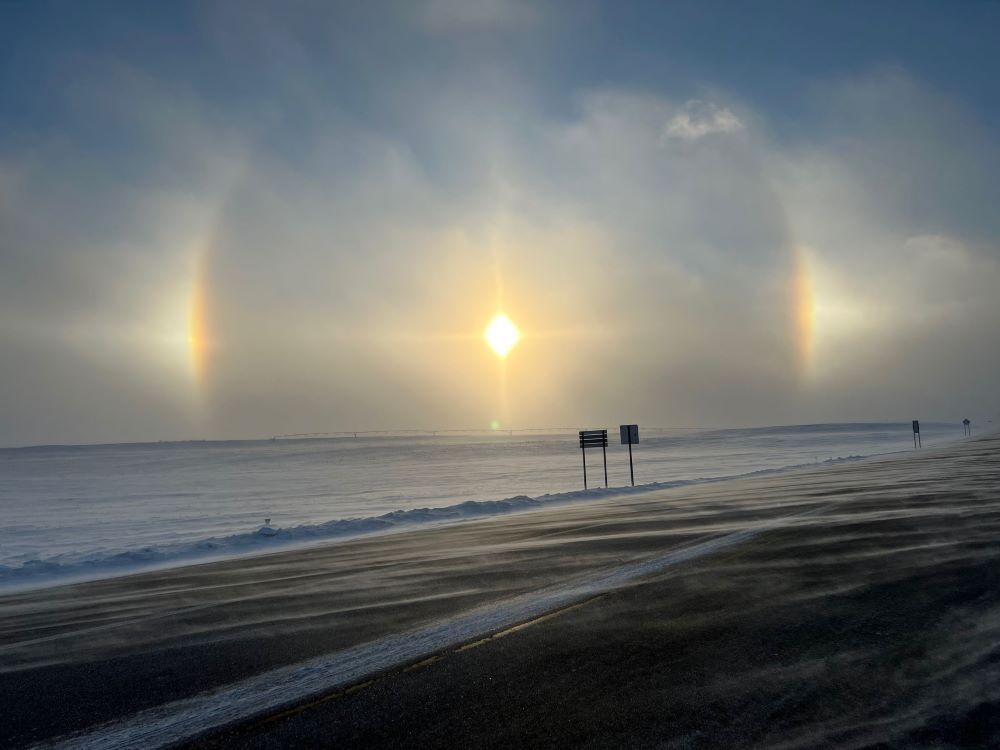
Parhelia, or sun dogs, are the result of sunlight passing through hexagonal ice crystals contained within cirrus cloud. They often appear in conjunction with 22° Haloes which are produced under the same conditions.
Light refracts from hexagonal ice crystals from cirrus cloud or, during especially cold weather, ice crystals which have fallen to low levels - known as diamond dust. The crystals act like prisms, bending light at a minimum angle of 22°. Sun dogs usually appear as bright spots on either side of the sun, sometimes with hints of red and blue. Rarely, a bright moon can produce a similar effect.
Crepuscular Rays
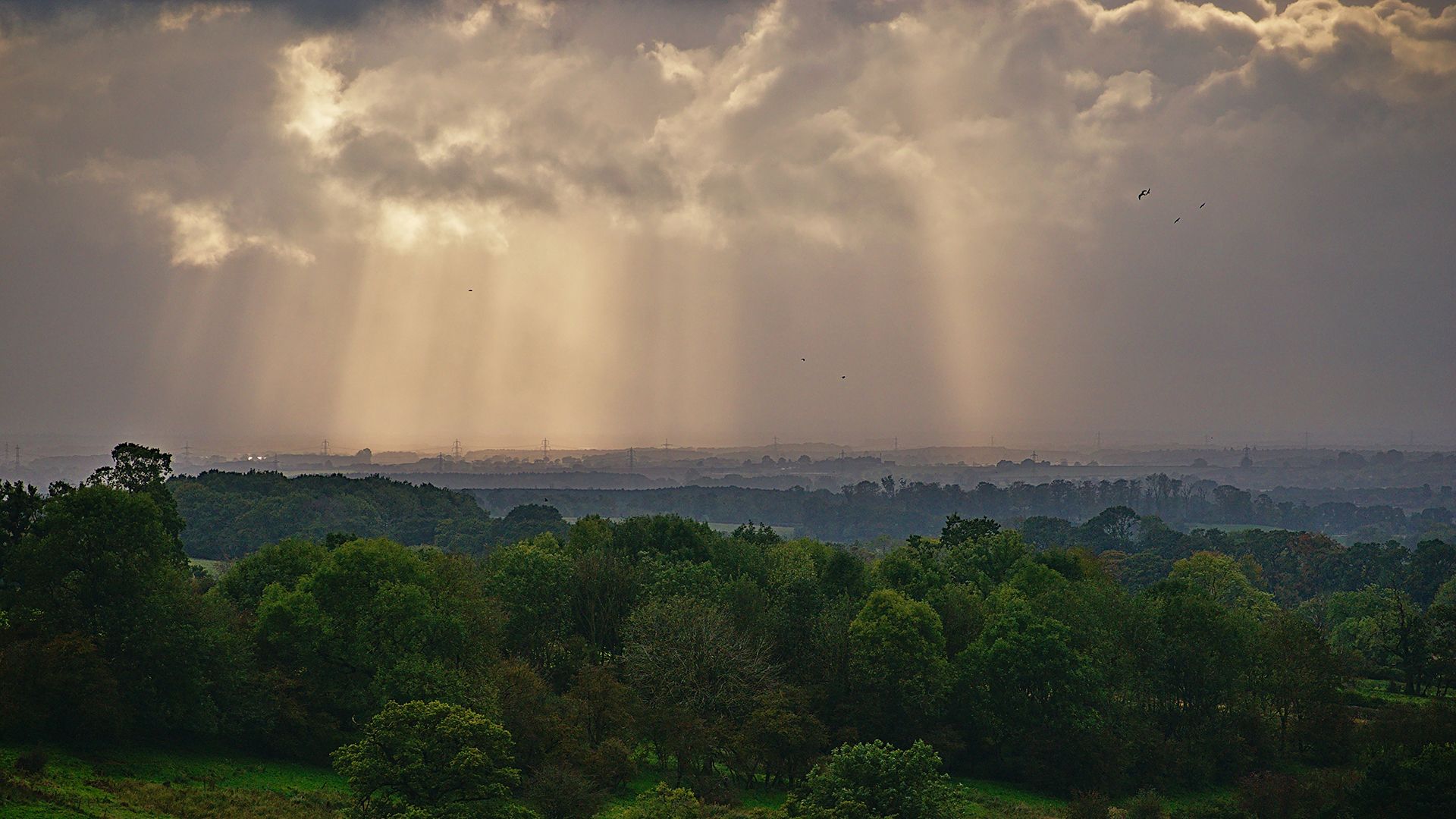
Crepuscular rays are sunbeams that stream through gaps in clouds, most visible at sunrise or sunset. Dust, smoke, and dry particles scatter sunlight, creating these dramatic rays. Although they seem to converge, the beams are nearly parallel. Their red or yellow colour comes from the sun’s low angle, which forces light to travel through much more atmosphere, scattering shorter wavelengths (blue and green) more strongly than longer wavelengths (yellow and red).
Circumzenithal Arc
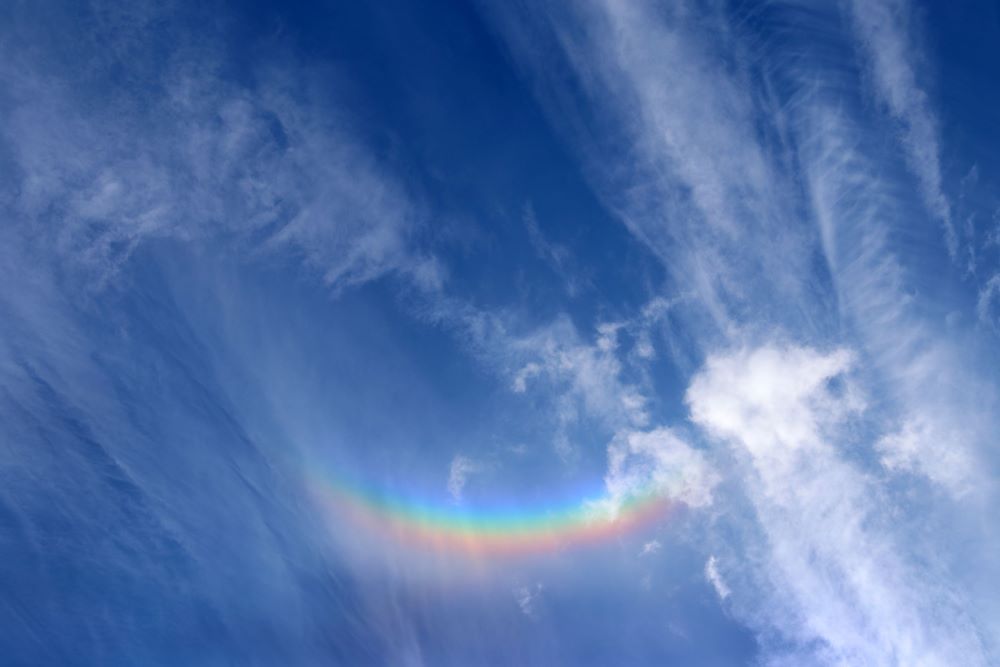
A circumzenithal arc looks like an upside-down rainbow and is a type of Halo. It forms when sunlight refracts through horizontal ice crystals in cirrus clouds, entering through the crystal’s flat top and exiting through a side face. These arcs are relatively common but often obscured by lower clouds. To see one, the ice clouds must be at the right height and angle, and the observer’s position matters as its visibility can vary greatly over short distances.
Our atmosphere is a canvas for light, painting everything from rings and arcs to giant shadows and colourful rays. These optical effects are not just beautiful—they reveal the physics of light and the dynamic nature of our weather.